Liepājas iela Kuldīgā, posmā no Pilsētas laukuma līdz Rātslaukumam.
En
Liepāja Street Promenade

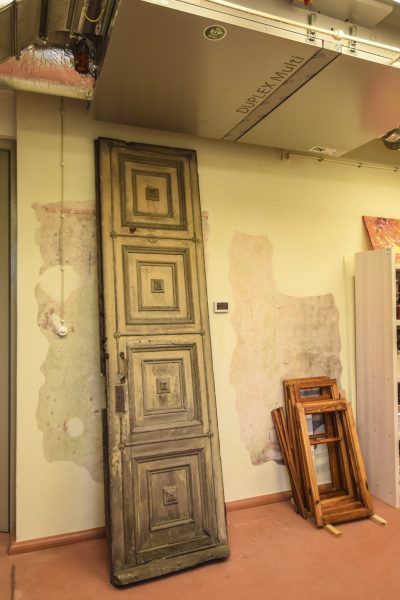
A distinctive pedestrian street lined with buildings from different centuries, offering a remarkable overview of the development of architectural styles from the 17th to the 20th century. As you stroll along the street, be sure to take a closer look at the beautifully crafted entrance doors, fanlights, and their exquisite decorative details. Throughout the street, it becomes clear that these doorways are far more than simple entrances—they are works of art.
The building at 11 Liepājas Street, together with its neighbouring houses at 9 Liepājas Street and 13 Liepājas Street, forms a harmonious and visually striking row of historic buildings at the beginning of Kuldīga’s pedestrian promenade. Town plans from 1797 and 1839 show that three timber buildings once stood on this site. Over time, these were replaced by the masonry buildings that can be seen today.
This ensemble of three buildings stands between the historic Town Hall Square and the town’s central square, which was established as the new market square during the second half of the 1930s. Until the 19th century, the timber houses were set apart from one another. As trade expanded, new masonry buildings filled the entire street frontage, leaving access to many courtyards possible only through carriage passages incorporated into the ground floors. The “Three Sisters” is a classic example of this dense urban layout. Today, the street is a peaceful oasis for visitors and residents alike, although many locals still remember when cars and buses travelled along it. It was only in 1999 that the street was transformed into the pedestrian promenade seen today.
9 Liepājas Street – Built in 1910, this building was designed by architect Max Theodor Berchi. It is one of the finest examples of Art Nouveau architecture in Kuldīga’s Old Town. The house belonged to pharmacist Walter von Grabe, and is therefore also known as the Grabe House. Over the years, it housed a number of local businesses, including Bernhard Goldberg’s dry goods store and J. Kerliņš’ butcher’s and sausage shop. The 1912 address directory records that, alongside several small shops, the building also contained J. Bekmanis’ coaching inn—a modest accommodation for travellers arriving by horse-drawn carriage—as well as the residence of plumber L. Saboļevskis.
11 Liepājas Street – The timber building that originally occupied this site housed several dry goods shops owned by different merchants in 1899. According to the 1912 address directory, the new masonry building belonged to master shoemaker Jānis Erdmans, who established his workshop here. Shoemaker Kārlis Jēkabs Grīnbergs also worked in the building. During the 1930s, the property belonged to Frīdrihs Krauze. After his death, the house, together with its outbuilding, chicken coop, and pigsty, was inherited by Elīze Bergholda.
13 Liepājas Street – This visually impressive and elegant masonry building was constructed around 1910 and stands out among the surrounding timber and masonry buildings. Until 1940, it was owned by the Beierfeld family, and the ground floor housed Benjamin Beierfeld’s leather goods shop.
Contacts
Related places